
October 2024 – Road trip
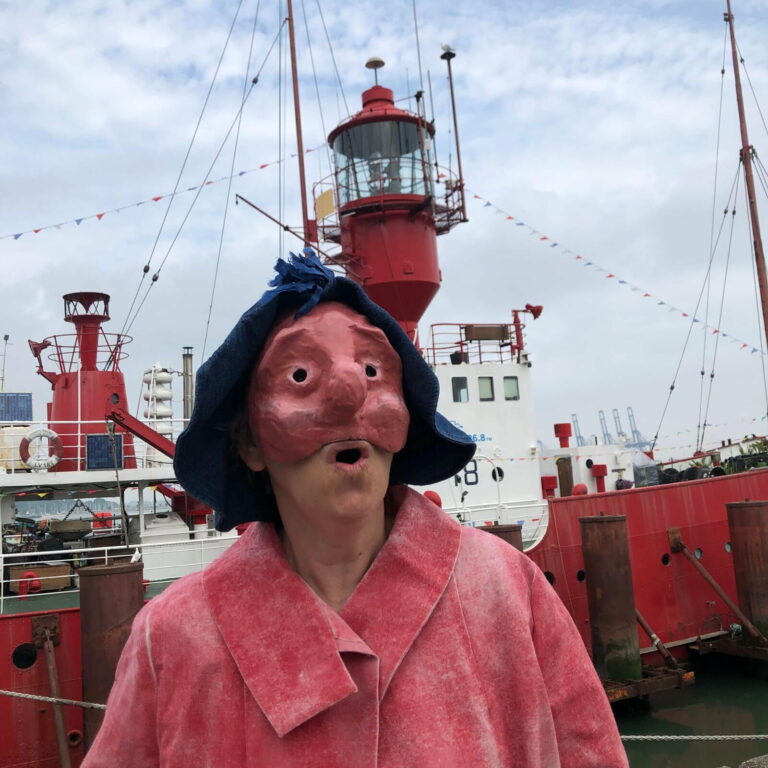
Road trip: Holland, Belgium and Slovakia Three days of IETM meeting in Den Bosch, Holland, followed by the International Carnival and…
Road trip: Holland, Belgium and Slovakia
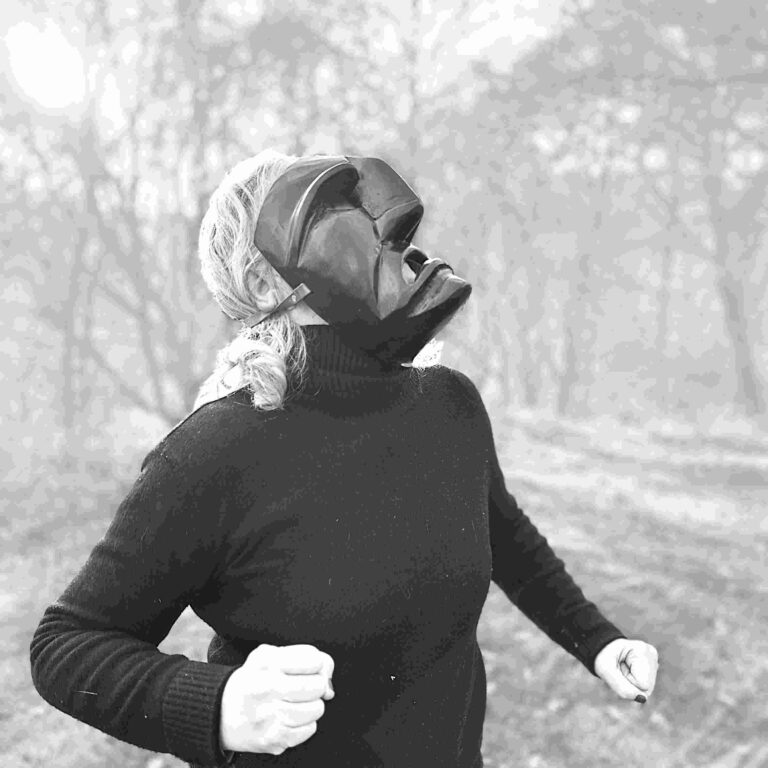
Three days of IETM meeting in Den Bosch, Holland, followed by the International Carnival and Mask Museum in Belgium. Then head to Slovakia (via “Prague”) for our first international residency.
Project:R&d/International research and development
DECLINING OR THRIVING?
The New International Reality
Working internationally is a cornerstone in the operation and ambition of IETM members worldwide, and IETM is a vehicle, platform and meeting point for making those ambitions come true.
Faced with the climate crisis, global inequalities and geopolitical tensions in today’s society, the modus operandi of international work needs an overhaul.
In 2024, IETM closed a chapter and opened a new one:
The New International in the Performing Arts (NIPA) was the fruit of IETM’s 2022-2024 Creative Europe Network project. The core aim of NIPA has been to seek new and sustainable collaboration models in the performing arts. Our four-year Creative Europe Network Project THRIVE, launching in 2025, focuses on how the performing arts sector can thrive in today’s reality by innovating its practices, strengthening capacities and skills, and harnessing its leadership in societal transformation.
On 29-31 October in Den Bosch, we celebrated our collective learnings from the past three years and set the course for the years to come.
International best selling author of Guantánamo Diary Mohamedou Ould Slahi Houbeini and members of the Berlin based cultural organisation Oyoun – Louna Sbou and Madhumita Nandi – delivered thought-provoking and inspiring keynote speeches.
A series of facilitated workshops, designed by Simón Adinia Hanukai, unfolded over two days and challenged us to devise relevant and proactive approaches to two key themes:
- The Rules of the Game, which asked us to consider how finances and other resources can be distributed fairly in international collaborations in order to ensure our partnerships are equitable and our work is environmentally sustainable.
- Rework the System, where we asked ourselves what we should and can do as a global performing arts community to transform the current economic and political systems.
Additionally, there has been plenty of opportunities for networking and to enjoy everything our host and co-organiser Verkadefabriek – the cultural hotspot of Den Bosch – had to offer. Verkadefabriek invited us to explore a cutting edge artistic programme with some of the most prominent voices in physical theatre, dance and new circus by Panama Pictures, Julian Vogel, Bambie and Het Zuidelijk Toneel.
During the meeting, we encouraged participants to attend the following local festivals happening at the same time to extend their trip and make the most of travelling to the Netherlands:
Festival ‘De Betovering’ in The Hague: 25 October – 2 November
The Festival De Betovering (literally translated as ‘the spell’ or ‘the enchantment’), offered children’s activities for more than a week in various places in The Hague, all around the theme of art. From crazy dance performances to street theatre, this outing has been a fun first introduction to art and culture for many children.
Festival Circolo in Tilburg: 18 – 27 October
Festival Circolo was all about circus and a far cry from the classic high-top tent with clowns. It explored the contemporary circus scene with a programme bursting with music, theatre, dance and visual arts with exciting circus acts – from acrobatic stunts full of speed to balancing work at dizzying heights.
Dutch Design Week in Eindhoven: 19 – 27 October
Dutch Design Week (DDW) was a nine-day event dedicated to the design of the future and the future of design. The emphasis was on expertise and talent, experiment, innovation and crossovers. Dutch Design Week has also served as a platform to analyse and discuss the design profession as a whole, demonstrating how the ideas and actions of designers can shape a positive future.
The IETM Focus Den Bosch 2024 happened as part of our Creative Europe project The New International in the Performing Arts (NIPA): Bridging local and global.

A living museum in Binche, Belgium
The MUMASK must preserve and showcase intangible heritage, a major challenge since it is, by its very nature, living and constantly evolving. With this in mind, it is essential for the museum to go beyond the simple display of items, by offering an immersive experience to visitors.
Our missions revolve around several fundamental commitments:

To preserve, restore, study and enrich our collections
From its foundation to the present day
Immerse yourself in the fascinating history of MUMASK through the ages.
The museum’s creation and development
In 1947, the mayor, Charles Deliège, and Samuël Glotz, who at that time was a teacher, launched the idea of creating a museum dedicated to the Carnival of Binche. Supported by the Belgian Royal Commission of Folklore, they met with Emile Langui, the director of the department of Arts and Letters of the ministry of Culture.
The latter was not convinced of the creation of a museum with an essentially local character and persuaded them to enlarge their project to other carnivals and to also include festivals from Europe and even from the whole world.
In 1962 an exhibition on “The carnival in Wallonia” was held at the municipal theatre aiming at raising awareness among the local population and preparing the ground. This event was organized by the municipality of Binche in collaboration with the Tourism Federation and the Cultural Centre of the Province of Hainaut. The great success of this exhibition encouraged the local authorities to carry out their project of an international museum.
Having enacted the foundation of the international Carnival and Mask Museum on 27 November 1963, the municipal council budgeted considerable sums for the acquisition of items. During twelve years before its official opening, acquisitions followed one another and a substantial collection consisting of local, European and international objects was set up.
In 1975, the Belgian government, in collaboration with the Council of Europe and UNESCO, requested that the exhibition “The mask in the European tradition” be organized in Binche. The opening of this exhibition, organized under the high patronage of his HM King Baudouin by the French Community’s ministry of Culture, the Province of Hainaut and the municipality of Binche, took place on the same day as the official opening of the international Carnival and Mask Museum, on 13 June 1975.
In 2025, on the occasion of its 50th anniversary, the institution undergoes modernisation in order to better reach its public and becomes the MUMASK, mask and carnival museum.
The MUMASK today
Since its creation and thanks to the works of its different curators, the museum has been able to build up an exceptional collection of 30 000 pieces, corresponding to 13 000 inventory numbers. In the exhibition rooms, masks, costumes, puppets, accessories, musical instruments, photographies, posters and multimedia documents are presented side by side.
This diversity illustrates the originality of our institution which studies on an equal basis carnivals and masking practices, which is a fairly uncommon approach among ethnological museums. Intangible heritage as a whole is hence at the heart of our actions.
Today, museums can no longer make do with displaying objets in showcases. Simply presenting items is not sufficient anymore and it is necessary to create ties with the visitors. Far from being just inert witnesses, collections have to be part of an immersive experience encouraging engagement, curiosity and emotion, especially when dealing with intangible heritage.
It is with this in mind that we are developing more and more immersive and educational mediation tools aimed at a large public, but also in order to make the visit more accessible for the visually and hearing impaired as well as for children.
A listed building laden with history
In the 16th century, the site of the MUMASK was occupied by the “Ostel” of the count Philippe II de Lalaing.
This “Ostel” was later acquired by a Binchois, Jehan du Quesne, canon of the Notre-Dame cathedral church of Cambrai, in order to found there a secondary school in 1570.
After more than a century of existence, the institution was entrusted in 1727 to the Augustinians, a teaching religious congregration, who tackled the school’s reorganization and the renovation of the buildings.
The main building was reconstructed in 1738 and has three storeys built to both sides of a bluestone staircase. In 1778, a wing was added to the main building. Today the museum’s main entrance is located in this wing. On the ground floor there was an old chapel which later became part of the gymnasium of Binche’s public school. It currently houses the museum’s auditorium and projection room.
The school was abandoned by the congregation in 1794 and reopened its doors in 1802 as a municipal school and later, in 1881, as a boys’ middle school. In 1949, the school became an “athénée royal” and from 1956 it was progressively transferred to the outskirts of the town.
On 3 March 1965, which was Ash Wednesday, the building was listed by the Royal Commission for Monuments and Sites.
Later on, the municipality of Binche decided to house a museum in this beautiful architectural ensemble and created the international Carnival and Mask Museum, now called “MUMASK, mask and carnival museum”.